| Home | Covenants | Crime Watch | Welcome Wagon | ACC form | Games | links |
Poison Around Us
 |
| Poison Ivy |
By
Nicholas P. Bickel
Our Homeowners
Association determined that many of us need information on how to rid poison
ivy, poison oak, or poison sumac from around the areas of our homes.
As many people have allergic reactions to these plants, it is very often
more than just an inconvenience to have these plants around.
We, especially children, can make inadvertent contact with the sap or
oils these plants secrete. Pets can
make contact with the plants and carry the oils on their fur to contaminate us.
As some of you
know, I have dealt with quite a bit of poison ivy and poison oak over the last
two seasons at the north end of the green belt.
As it now appears, I may have succeeded in getting rid of this nuisance.
As a result, our Homeowners Association suggested that I put a few of my
experiences together to help others.
 |
Poison Oak |
What
Do These Plants Look Like?
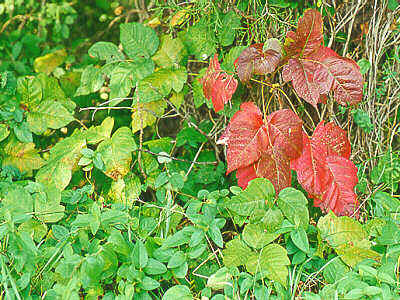
- Poison
Ivy −This plant has a
pointed and somewhat shiny three-leave cluster.
In the spring, or during periods of a lot of rain, the plant can have
some reddish tint in the leaves.
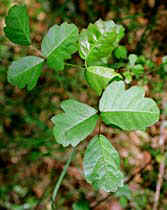
- Poison
Oak − This plant also has
three-leave clusters, but the ends of the leaves have a rounded lobe
appearance similar to that of an oak leaf.
- Poison
Sumac − This plant has
groupings of seven to nine leave clusters.
The pointed leaves appear with a double-row pattern along the stem
and a single leaf at the tip end. It
has a fern-like appearance.
Where
Are They?
The areas of
most concern to us are the greenbelt at the center of our community and the
fence areas along the eastern, western, and northern perimeters.
All of these plants can appear in the open grassy areas of a yard or very
often as a vine growing up the side of trees and fence posts.
Sometimes the vine is quite large in diameter if the plant has grown
undisturbed for many years.
How
Do You Address the Problem?
- Apply
a herbicide.
There are many good herbicides available at nurseries, Wal-Mart, Home
Depot, Lowes, ACE Hardware etc. There
are several products made by Ortho, Drexal, and other chemical companies
that are all similar in their effectiveness.
For
patches in the yard, along the base of fences, or where the vine is not very
high, I suggest using a hand, pump-up type sprayer to apply the chemical
directly on the plant. This way you
can better control where the spray goes and how much of it you apply.
Usually, the product you use will require that you mix it with water; so
follow the mixing instructions on the label to ensure the mix is strong enough
to do the job.
Tip:
While I mix in the correct amount of water, I add a few tablespoons of
common liquid dishwashing soap. The
soap acts as a wetting agent, so the spray mix adheres to the leaves better.
If I have a secret for combating these plants, this is it.
- Begin
treatment and have patience.
Make sure you wet both sides of the leaves if possible.
The root systems of these plants tend to grow extensively.
When you spray them with any of the commercial weed killers, the
leaves may appear to wilt and die in a day or so, but then the foliage may
return. The plant may also
spring up in a new spot near the location of the first plant.
When this happens, do not give up.
Because
of the runner type of root system, this is normal.
You will need to apply a second, third, or as many applications as
necessary for the systemic action of the herbicide to penetrate all of the root
system. There is good news.
These vines are dumb; they will tell you where they are still alive by
sprouting new leaves or a new plant. Just
simply spray the new growth again.
Tips:
For large vines in trees or for vines on tall fences or other structures,
I use hedge clippers to cut the vine off at the ground level.
I make a second cut about two inches above the first cut.
Make sure you remove this section of plant completely from the vine so
that there is a significant gap between the remaining vine and the ground.
Then I use the hand, pump-up sprayer to spray the mix thoroughly on the
vine where I made the cut at ground level.
The upper part of the vine will begin to wilt in usually a few days.
Eventually, in a month or so, the plant will die out completely as the
sap dries out. As the root system
may be large, it is important to monitor the ground area around the severed vine
often for new growth and hand spray any new foliage as it appears.
Again be patient; eventually the poison ivy, oak, or sumac will get the
idea and give up.
- Mark locations. Because you may need to apply the herbicide multiple times every few days, it is a very good idea to mark the locations of the plants that you have found and treated so you do not lose track of them. I found inexpensive colored flags, which you can buy at Home Depot or Lowes, extremely useful for this purpose. The flags have thin metallic wire-like poles so you can easily push them into the soil next to the plant. This way, you can recall the area you treated and what area you still need to treat. The flags also help you keep track of your progress. Please tell people, especially children, what these flags are for so that they will stay away from these areas.
What
Should You Do and Not Do?
Like
most things, there are things that you should do and things that you should not
do when combating these stubborn plants.
Do
·
Wear
proper clothing. Wear
gloves, long-sleeve shirts, and long pants to keep any incidental contact of the
leaves or vine to minimal areas on your body.
Pay special attention to the gloves you use.
It is best to use disposable gloves, and just simply throw them away.
·
Store
all exposed clothing separately.
You need to store long-sleeve shirts and pants in a separate area from
the rest of the laundry because the sap or oil could contaminate the other
clothes.
·
Wash
clothing separately.
You need to wash exposed clothing separately from the rest of your
clothes to avoid contaminating all of your laundry.
Using a little bleach on non-colored clothing is helpful when washing.
·
Clean
your tools.
These tools will have the sap and oils on them.
If you later touch a tool where the tool had contact with the plant, it
is possible to get an allergic reaction—even several days or months after you
cut the plants. Wipe the tools down
with a good solvent, such as mineral spirits or turpentine.
Make sure you use gloves and dispose of the rag or paper towels you used
when you finish.
·
Remove
dried vines.
Remove dried vines by cutting them up, bagging them in a sealed plastic
bag, and disposing of them. Again,
remember to store and wash clothes separately after you have removed dried
vines.
·
Clean
yourself quickly.
Take a long, warm, and sudsy shower immediately after dealing with these
plants. A good soap washing may
greatly reduce any effects of an allergic reaction.
Don’t
WARNING: DO NOT BURN any poison ivy, poison oak or poison sumac vines or foliage! Even if the vines and foliage have dried out for a long time. When burned, the oil and sap will reactivate in the smoke and can cause all exposed areas of your eyes, face, body, and even your lungs to suffer allergic effects.
What
Do You Do If You’re Exposed?
I
found several products from Technu® that work well to reduce both the effects
and the discomfort of normal to mild exposure.
·
Prevention
− The Technu
Oak-n-Ivy Cleanser dissolves and removes the sap or oils that get on the skin.
Use it to clean the exposed areas of the body thoroughly and then rinse
off in a hot shower. If you use it
immediately after known exposure, it can stop or greatly reduce the onset of
symptoms.
· Allergic Reaction − The Technu Oak-n-Ivy brand CalaGel has a clear gel-like formula that you can use instead Calamine Lotion. In my experience, an application of Calamine is messy and unsightly, and it does not do much to control the itch after an hour or so. You can find the Technu products over the counter at Walgreen's. It is sometimes available at Wal-Mart. Ask your pharmacist if the Technu products are right for you.
·
Severe
Reaction − For
severe cases or where the rash and swelling is located around the eyes or other
sensitive areas, consult your doctor for the proper treatment.
Where
Can You Get More Information?
For
actual pictures of foliage and for more information about living around and
controlling all of these plants, click on the following link:
For
information about Technu Products and to see how the packaging looks, click on
the following link: